
Best foundation for olive skin: warm-undertone picks
Olive skin has a green-yellow undertone that throws off most "warm" and "neutral" shades. Here is how I match foundation to it, plus eight brand-neutral picks that read natural instead of orange, pink, or gray.
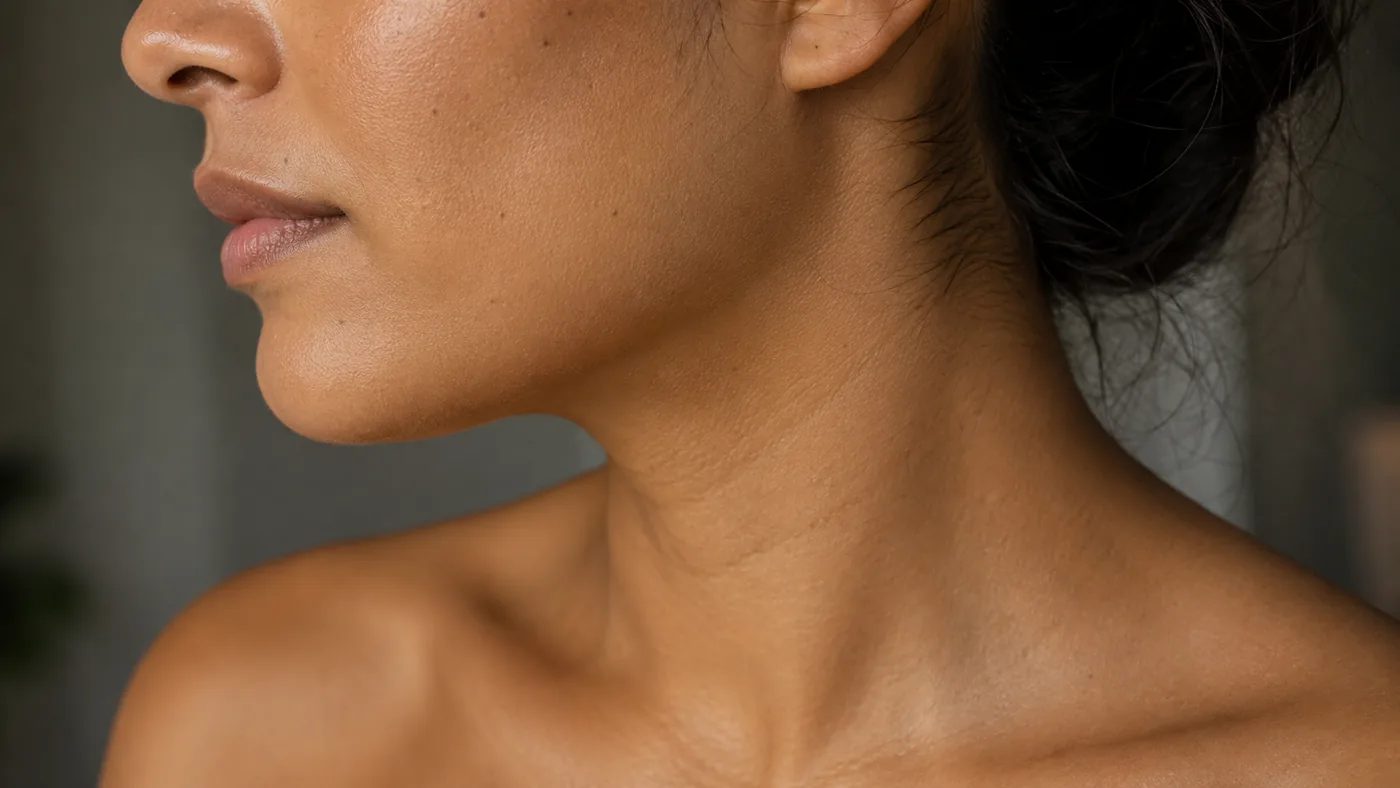
What olive skin needs from a foundation
If you have olive skin, you already know the frustration. You pick the shade that matches your forearm in the shop, it looks fine for an hour, and by lunch your face has gone slightly orange, slightly gray, or just somehow off from your neck. The skin is not the problem. The undertone is what foundation brands keep missing.
Olive skin, which lines up with Fitzpatrick Type IV, has a warm undertone with a distinct green-yellow cast under the surface. That green is the part that trips up shade matching. Plain warm skin can take an orange-based "warm" foundation and look golden. Olive skin cannot, because the orange pigment plus the green undertone turns muddy. Swing the other way to a pink-based "neutral" shade and it cannot account for the green at all, so it sets ashy and gray.
So the brief for olive skin is specific. You want a foundation with a warm or neutral-warm, yellow-based undertone, not a peach one and not a pink one. You want a finish that is light enough to let your natural warmth show through, because olive skin looks healthiest when it is not flattened under heavy coverage. And because Type IV skin tans fast and marks easily, it helps to pair a lightweight base with a real broad-spectrum SPF underneath rather than relying on foundation to protect you.
How I judged the undertone match
Foundation guides love to list products. The harder question is whether a shade actually disappears into olive skin, and that takes more than one glance in shop lighting. Here is the standard every pick below is held to, and the same test you can run on any candidate shade.
The undertone-match test
Natural light and flash, both. A shade can look perfect under warm shop bulbs and turn gray in daylight, or vice versa. Judge a match on the jaw in real daylight first, then under a phone flash, because flash photography exposes a pink or ashy mismatch instantly.
Oxidation over a few hours. Olive skin is notorious for foundations that "develop" warmer or darker as they sit. A shade that matches at application but pulls orange by mid-afternoon has failed. Only trust a match you have worn for at least three to four hours.
Pilling with primer and SPF. Because olive skin should wear SPF under makeup, a foundation has to play nicely on top of it. If a formula balls up, separates, or slides once it meets a sunscreen and primer underneath, it is not a base you can actually live in.
None of this needs a lab. It is just the difference between a shade that matches in the shop and one that matches by 4pm, in a photo, over your sunscreen. That is the bar.
The three foundation types to choose between
Before any brand, decide what kind of base you want. Olive skin can wear all three of these well, as long as the undertone is right. Most people end up owning two: an everyday lighter one and a heavier one for occasions.
Sheer-to-medium
A skin-tint, tinted moisturizer, or buildable medium foundation. This is the everyday choice for olive skin because it evens tone while letting your natural warmth show. Satin or natural finish, not full matte.
Full coverage
A long-wear, higher-pigment foundation for events, photos, or days you want to fully even out dark spots and redness. The risk on olive skin is oxidation, so undertone accuracy matters most here.
Skin-tint or SPF hybrid
A light tint with built-in SPF for low-effort days. Treat the SPF as a top-up, not your main sun protection, and still layer a dedicated broad-spectrum sunscreen underneath.
Start with two
If you are rebuilding your kit, buy a sheer-to-medium base for daily wear and one full-coverage formula for occasions, both in a warm or neutral-warm shade. That pairing covers ninety percent of olive-skin needs without a drawer full of half-used bottles that almost matched.
How to find your olive undertone and match a shade
The single most useful skill here is reading your own undertone, because it lets you shop by description instead of guessing. A few quick checks:
- The gray-or-orange tell. If "neutral" shades go ashy on you and "warm" shades go orange, you are almost certainly olive. That contradiction is the signature of a green-yellow undertone.
- The jaw, not the wrist. Swatch three candidate shades along your jawline, down onto the neck, never on the inner wrist, which rarely matches your face. The right one vanishes.
- Gold over silver. Olive and warm skin usually looks better against gold jewelry than silver. It is a soft signal, not a rule, but it points warm.
- Read the label, not the name. Shade names lie. Look for the undertone code instead: W or G (warm, golden), N (neutral), and avoid C or P (cool, pink). A "neutral-warm" or "golden" mid shade is your friend.
When you are between two shades, size up rather than down. Olive skin almost always looks more natural a touch deeper than too fair, because going lighter immediately reads gray.
How we choose: picks are selected editorially to fit olive, Type IV skin, based on undertone, finish on olive skin, and reputation. No brand pays for placement. As an Amazon Associate this site earns from qualifying purchases, at no extra cost to you; links open a search so you can compare shades and current prices yourself.
Eight foundations for olive skin
These are described by what they do for olive skin, so you can grab whichever brand you already trust or whatever your local shop stocks. Each pick names the kind of undertone and finish to look for, plus a budget alternative.
- Deep shade ladder with genuine golden and warm-neutral olive mids
- Satin, skin-like finish that lets olive warmth show through
- Buildable, so one bottle covers light and fuller-coverage days
- For events and photos, in a golden, not peach, undertone
- Known for staying true through the day rather than warming up
- Covers dark spots and redness without going gray
- Sheer wash of color with broad-spectrum mineral SPF built in
- Shades split by neutral, warm, and olive undertones
- Treat its SPF as a bonus, layer real sunscreen underneath
- A luminous, satin formula that flatters olive warmth
- Avoids the flat, dull look full-matte can give Type IV skin
- Choose a warm or neutral-warm shade only, never rosy
- Controls shine through the T-zone without going chalky
- Soft matte, not flat matte, to keep some life in the skin
- Golden Warm shades stay non-orange as they mattify
- For lighter olive skin where full-warm shades go too deep
- N and W codes let you pick neutral-warm, never a pink "light" shade
- Light-to-medium build so it does not sit heavy on fair-olive skin
- Bare-skin coverage for reactive or breakout-prone olive skin
- Fragrance-free, lightweight, easy to layer over treatment SPF
- Warm-neutral wash that evens tone without a mask effect
- Concentrated drops you mix into moisturizer or foundation to adjust
- Lets you nudge a near-match into a true olive shade
- Useful when stock shades sit just pink or just light
Not sure you are actually olive?
Skin tone and Fitzpatrick type usually line up, but not always. If you are guessing, it is worth confirming your phototype (the clinical term for skin type) before you buy. Not sure? Take the Fitzpatrick test → and you will know whether you are Type IV olive or one of the types either side of it.
Applying foundation on olive skin
Even a perfect shade can read wrong if it goes on wrong. A few things that make the difference on Type IV skin:
- SPF first, always. Olive skin tans and spots easily, so a broad-spectrum sunscreen goes under everything. Let it absorb for a couple of minutes before foundation so the two do not pill.
- Less product, more buffing. Olive skin looks best when its own warmth shows, so use a thin layer and build only where you need it. A damp sponge presses product in and keeps the finish skin-like.
- Bring it down the neck. The most common olive-skin mistake is a face that is lighter or pinker than the neck. Blend foundation down and check the join in daylight.
- Set lightly, with a warm-toned powder. A translucent or banana-toned powder sets oily areas without the gray cast a too-cool powder can leave on olive skin. Skip heavy all-over powder if you want the natural glow.
- Re-check in a photo. Snap a flash photo before you leave. If your face looks ashy or pale against your neck, the shade is too cool or too light, and you will catch it now instead of in everyone else's pictures.
Olive skin is one of the easiest tones to flatter once the undertone is right, and one of the hardest to fake your way through when it is wrong. Match the green-yellow, keep the finish light, protect underneath, and foundation stops being a fight. For the full picture of what Type IV skin needs beyond makeup, read the Fitzpatrick Type IV guide.
One health note: melasma is often hormone-driven, and anyone pregnant or nursing should check with their doctor before starting new active ingredients like brightening treatments.
Sources
- Fitzpatrick TB, "The validity and practicality of sun-reactive skin types I through VI," Archives of Dermatology, 1988
- American Academy of Dermatology, sunscreen FAQs
This site is educational and is not medical advice; for any skin concern, see a board-certified dermatologist.
Olive-skin foundation questions
What undertone is olive skin?
Olive skin has a warm, green-yellow undertone sitting under a medium to tan surface tone. The green is what sets it apart from plain warm skin, and it is why pink-based "neutral" shades look ashy and orange-based "warm" shades look muddy. The best match is a foundation labeled warm, golden, or neutral-warm, with a yellow rather than peach base.
Should olive skin use warm or neutral foundation?
Usually warm or neutral-warm. A true warm-yellow base flatters most olive skin, while a balanced neutral works for lighter or cooler olive tones. Avoid anything described as cool, pink, or rosy, which fights the green-yellow undertone and reads gray or ashy as it sets.
Why does my foundation turn orange or gray on olive skin?
Orange means the shade is too warm or peach for your surface tone, and the pigments oxidize darker through the day. Gray or muddy means the shade is too pink or cool, so it cannot account for the green in your undertone. Both are matching problems, not skin problems. Swatch in daylight, then check again after a few hours to catch oxidation.
What finish is best for olive skin?
A natural, skin-like finish usually flatters olive skin most, because olive tones look healthiest when their own warmth shows through. A sheer-to-medium or satin foundation lets that happen. Full-matte formulas can flatten the natural glow, so save those for oily areas or photos rather than an everyday all-over base.
Do I need SPF in my foundation if I have olive skin?
Foundation SPF is a useful top-up but not a substitute for proper sunscreen, because you rarely apply foundation thickly enough to reach its labeled protection. Olive, Type IV skin tans easily and is prone to dark spots and uneven tone, so a dedicated broad-spectrum SPF under makeup matters more than the SPF in the foundation itself.
What is the best drugstore foundation for olive skin?
Look for a budget line with a deep shade range and shades labeled with a golden or warm-neutral undertone rather than only fair, medium, and tan. The widest-range affordable foundations tend to include a few genuinely olive-friendly shades, which is what we point you toward in the picks above so you can match by undertone rather than brand.
Sure you are Type IV?
The right foundation undertone follows from your skin type. Take the free Fitzpatrick test, confirm whether you are olive Type IV, and get the rest of your sun-care routine in under a minute.
Take the free test →