
Fitzpatrick Type III: medium skin that sometimes burns, then tans
Uneven tone that creeps in over the years, the occasional burn you shrug off, and a sunscreen you never quite stick with: that is the day-to-day reality of Type III. It sits right in the middle of the Fitzpatrick scale, medium skin with a golden undertone that can catch a mild burn after too much sun, then settles into a light-brown tan. Here is how to recognize it, and a routine built around a daily SPF pleasant enough to actually wear.
How to identify Type III
Type III is the middle of the road, which is exactly why it is easy to second-guess. People with medium skin often look at the very fair types and the deep olive types and assume they fall somewhere in between without being sure where. The clearest way to place yourself is to look at your skin where the sun never reaches it, the underside of your upper arm, and notice how it behaves after a long day outdoors.
Most Type III skin shares a recognizable set of traits:
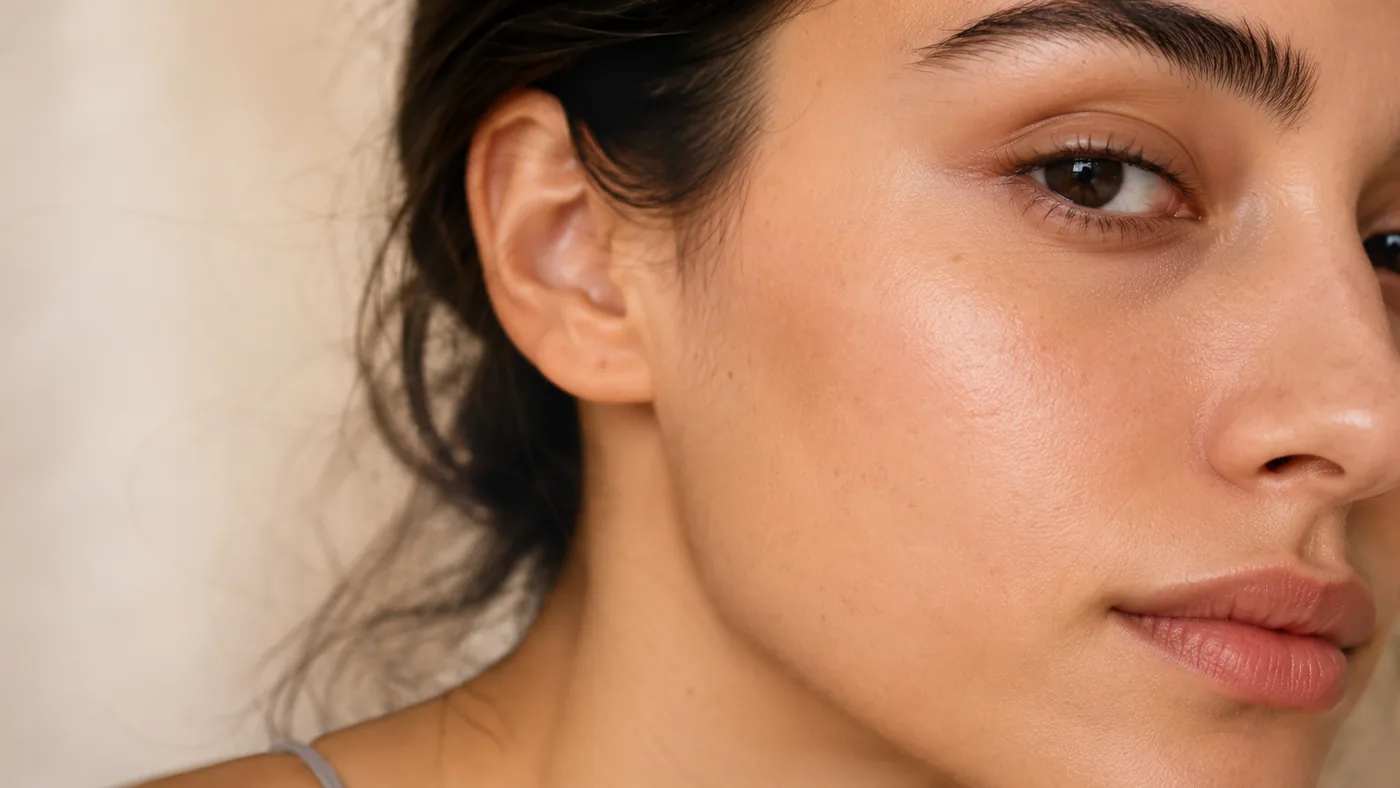
- Skin color: pink to medium beige, often with a golden or warm undertone, deeper than fair Type II but lighter than true olive Type IV.
- Eyes: commonly hazel, light brown, or a warm brown.
- Natural hair: dark blonde through medium and dark brown.
- Freckling: some people freckle, but it is not the defining feature it is for Types I and II.
- Sun history: you burn occasionally if you overdo it, but you usually end up with a tan rather than a peel.
Type III is common across many backgrounds, including Mediterranean, Latin American, Middle Eastern, and parts of East and South Asia. If your skin tans easily and you almost never burn at all, you are likely a step deeper on the scale. That is the point where Type III shades into Type IV, and it matters for product choices, so it is worth reading the Type IV olive skin guide to compare. A lot of people who describe their skin as olive are closer to Type IV than Type III.
Not sure if you are III or IV?
The single best tell is your burn history. If a long, unprotected day in summer sun usually gives you a mild burn before the tan, you are Type III. If you essentially never burn and go straight to a deep tan, you are Type IV. When it is genuinely a coin flip, take the Fitzpatrick test, which weighs several signals at once instead of one.
How Type III reacts to the sun
This is the heart of the scale: not what your skin looks like, but how it behaves under UV. Type III skin has more melanin than the fair types, so it has a built-in head start on protection. It burns less readily than Type I or II, and when it does burn the burn is usually mild rather than blistering. Left in the sun, it tans relatively easily and the tan comes in fairly uniform, ending up a light bronze or honey brown.
That moderate resilience is genuinely useful, but it also breeds a false sense of safety. Type III still burns, and it sits at higher risk of sun damage than the deeper Type IV. More to the point for day-to-day skin, the same melanin that gives you a nice tan can also pile up unevenly. A patch that catches more sun, or skin that has been inflamed by a healing breakout, can darken faster than the area around it. That is why the two concerns Type III people raise most are an uneven tan and early dark spots, not raw sunburn.
The right routine for medium skin
A Type III routine does not need to be complicated. It needs to do two jobs well: block the daily UV that drives uneven tone, and keep pigment even so a tan comes in smoothly and early marks fade before they settle.
Morning
- Cleanse gently. A mild, non-stripping cleanser is plenty. Medium skin does not need aggressive scrubbing to look clear.
- Vitamin C serum. A morning antioxidant helps even out tone over time and supports your sunscreen against daily UV. This is the step that pays off most for Type III, because it targets exactly the uneven-tone tendency that defines this type.
- Moisturizer. A light moisturizer, ideally one with niacinamide, keeps the skin barrier comfortable and gently works on even tone.
- Broad-spectrum SPF 30 or higher, every day. This is non-negotiable for Type III. A no-cast formula matters here so you are not left with a faint gray film. SPF 50 for long days outside, the beach, snow, or altitude.
Evening
- Cleanse to remove sunscreen and the day.
- Treat lightly. A gentle even-tone or barrier step at night, niacinamide again or a mild retinoid if your skin tolerates it, supports the daytime work. Introduce any active slowly.
- Moisturize to finish.
One caution before adding anything new: melasma and stubborn pigment are often hormone-driven, so if you are pregnant or nursing, check with your doctor before starting any new active ingredient.
For color without sun damage, a gradual self-tanner in a medium tone is your friend. Build it over a few days so it reads natural on skin that already carries warmth, rather than going dark all at once.
What to look for in products
You do not need to memorize brand names. You need to recognize the handful of features that suit medium skin, then pick whatever you already trust at the shelf.
- No-cast SPF. Heavy mineral (zinc and titanium) sunscreens can leave a gray film on medium skin. Look for a chemical, hybrid, or tinted formula described as leaving no white cast.
- Vitamin C in the morning. A stable antioxidant serum for even tone and daily UV defense.
- Niacinamide. A gentle, widely tolerated even-tone ingredient. It belongs in your moisturizer or as its own light step.
- Gradual self-tan in a medium tone. Buildable color that suits skin that is already warm, so it does not read orange or too deep.
- Gentle exfoliation, used sparingly. A mild acid now and then is fine. Harsh physical scrubs are not.
Common mistakes to avoid
Most of the trouble Type III runs into comes from assuming medium skin is bulletproof. It is not, just better defended than fair skin.
- Skipping sunscreen because you tan instead of burn. The tan is the problem, not the proof you are safe. Daily UV is what drives the uneven tone and early dark spots medium skin is prone to.
- Reaching for harsh scrubs. Abrasive physical exfoliants strip the skin barrier and leave fresh skin more vulnerable to sun and to post-inflammatory dark marks. Swap them for a gentle cleanser and the occasional mild acid.
- Picking the deepest self-tanner. A too-dark formula on already-warm skin reads unnatural. A medium tone, built gradually, looks like a real tan.
- Letting a dark spot ride. On Type III, early marks set in if you ignore them. Catching them with daily SPF and an even-tone ingredient is far easier than fading them later.
- Heavy mineral SPF that casts gray. A white or gray film is avoidable. A no-cast or tinted formula solves it.
Products that work for Type III
As an Amazon Associate this site earns from qualifying purchases. Picks are chosen on fit for Type III skin, not commission. Links open a search so you can compare current options.
- Invisible gel finish, leaves no gray film on medium skin
- Wears smoothly under a vitamin C serum and makeup
- Broad-spectrum chemical formula for daily wear
- Evens tone and supports your SPF against daily UV
- The highest-payoff step for medium skin
- Vitamin E and hyaluronic acid help a tan come in uniform
- Color without sun damage or uneven tan lines
- Medium tone reads natural on warm skin
- Buildable over a few days, never orange or streaky
- Niacinamide plus ceramides, a widely tolerated even-tone step
- Keeps the barrier comfortable under SPF
- Targets early dark spots before they set in
Searching for "olive" products? Start here
Most product ranges aimed at this part of the scale are labeled for olive skin, not medium, because that is the word people use. If you sit on the deeper edge of Type III, those products will likely suit you. See the Type IV olive skin guide and the dedicated best foundation for olive skin roundup, which match warm undertones the way medium skin needs.
Related reading
Place yourself precisely, then go a layer deeper into the type that fits:
Type III questions, answered
Is Fitzpatrick Type III the same as olive skin?
Not quite. Type III is medium skin that sometimes burns mildly before it tans, sitting right in the middle of the scale. Olive skin is usually Type IV, which tans easily and rarely burns. The two are neighbors and overlap at the edges, so if you almost never burn and tan deeply, read the Type IV guide instead. Many people who call their skin olive are actually closer to Type IV.
Does medium skin need sunscreen every day?
Yes. Type III burns less than fair skin, but it still burns, and the bigger long-term issue is uneven tone and early dark spots from daily UV. A broad-spectrum SPF 30 or higher, worn every day and reapplied during long sun exposure, is the single most useful habit for keeping medium skin even and protected.
What SPF should Fitzpatrick Type III use?
Broad-spectrum SPF 30 is a sensible daily minimum for Type III, with SPF 50 for long days outdoors, beach trips, or high altitude. Reapply every two hours when you are in direct sun, and more often if you are sweating or swimming. A no-cast formula matters because medium skin can pick up a faint gray film from heavy mineral sunscreens.
Why does my medium skin tan unevenly or get dark spots?
Type III has enough melanin to respond strongly to UV, so any spot that gets more sun, or any inflammation like a healing breakout, can darken faster than the skin around it. Daily SPF plus a gentle, even-tone ingredient such as niacinamide or vitamin C helps the tan come in evenly and fades early marks before they set in.
Can I self-tan if I am Fitzpatrick Type III?
Yes, and a gradual self-tanner is the safe way to get color without sun damage. Choose a medium-tone formula rather than a deep one so it reads natural on skin that already has warmth, and build it over a few days instead of all at once.
Is the Fitzpatrick test a medical diagnosis?
No. The Fitzpatrick scale is an educational tool for understanding how your skin reacts to the sun and choosing sun care. It is not a diagnosis. For any mole, spot, or skin concern, see a dermatologist, who can assess your skin in person.
Sources
- Fitzpatrick TB. The validity and practicality of sun-reactive skin types I through VI. Archives of Dermatology, 1988. PubMed
- American Academy of Dermatology. Sunscreen FAQs