
Fitzpatrick Type IV: the olive skin sun-care guide
A dark spot that outlasts the blemish that caused it by months, a patch of melasma that deepens every summer: those are the concerns that actually bring people to this page. They point to Type IV, olive or light-brown skin with a warm, golden undertone that tans easily and rarely burns. But tanning easily is not the same as being unaffected; the same ready pigment is what makes marks linger. Here is how to know if you are Type IV and how to care for it.
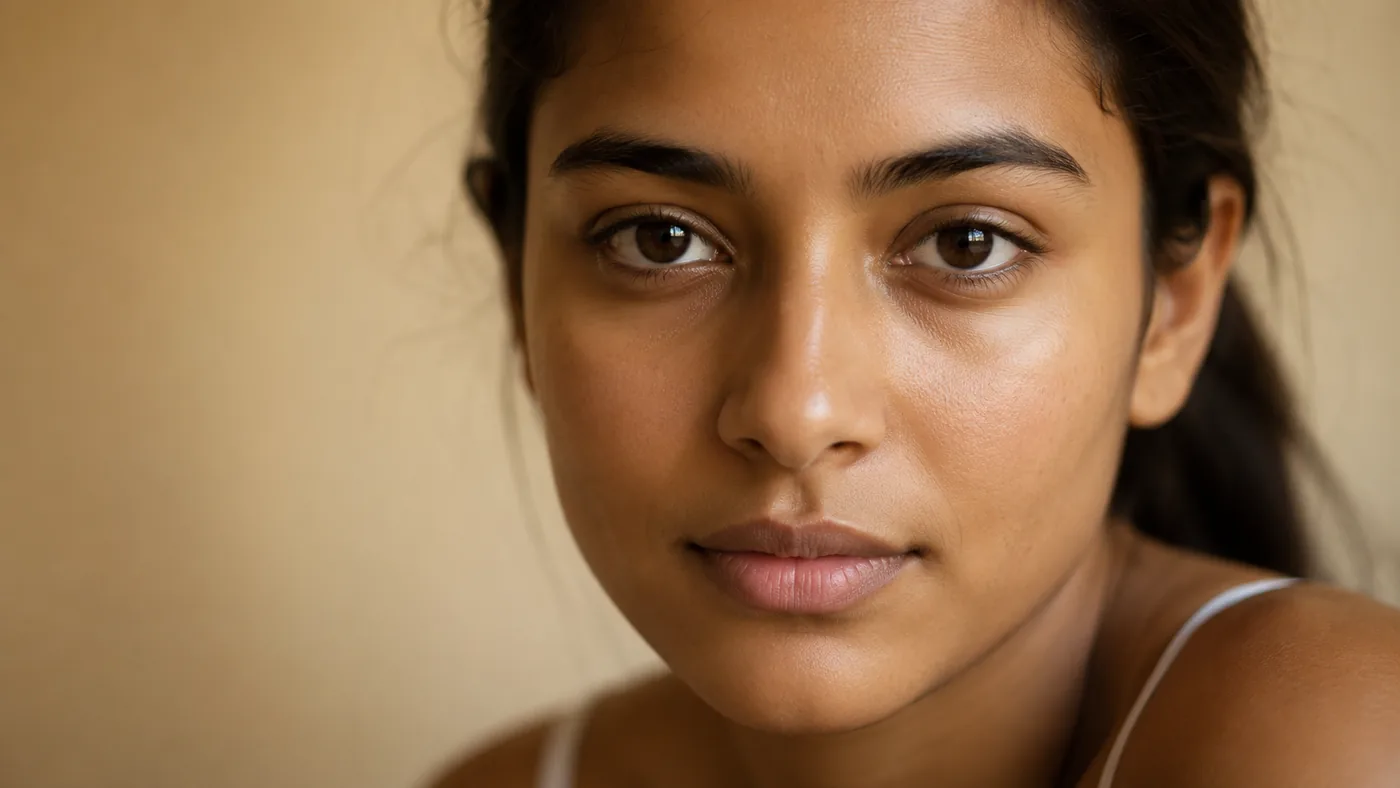
How to know if you are Type IV
The Fitzpatrick scale sorts skin into six phototypes (the clinical term for skin type) by how it reacts to the sun, and Type IV sits in the lower-middle: deeper than Type III medium skin, lighter than Type V brown skin. If you tan to a warm brown after a few days outside and a long day in the sun usually leaves you with color rather than a sting, Type IV is very likely your type.
People who are Type IV most often share a recognizable set of traits. None of them alone makes you Type IV, but together they paint the picture:
- Skin color: olive or light brown even where the sun never reaches, with a warm, golden, or faintly green-gold cast rather than a pink or rosy one.
- Undertone: warm and golden. Gold jewelry tends to flatter; the veins on your inner wrist often look greenish rather than blue.
- Eyes and hair: usually brown or dark eyes, with dark brown or black hair.
- Burn history: you rarely burn, and when you do it is mild and brief. You almost always tan rather than peel.
- Tan response: you tan easily, quickly, and deeply, holding the color for weeks.
Olive skin shows up across many backgrounds, including Mediterranean, Middle Eastern, Latin American, South Asian, and some East Asian heritage, so Type IV is one of the more common phototypes worldwide. The label describes how your skin behaves in the sun, not where you are from.
Not certain whether you land at Type IV, Type III, or Type V? The fastest way to check is to answer for how your skin actually behaves rather than how it looks. Take the free Fitzpatrick test → for a result in under a minute, or read how to find your type by burn history.
How olive skin reacts to the sun
The thing that defines Type IV is a generous, fast melanin response. Your skin makes pigment readily, which is what protects you from burning. That is genuinely an advantage on the burn front, but it comes with a catch that catches most olive-skinned people off guard: the same readiness to make pigment is what makes Type IV prone to uneven tone, dark spots, and melasma.
In practice, this is what sun does to Type IV skin:
- It tans before it warns you. Because burning is rare, there is no sting to tell you to get out of the sun, so the damage accumulates quietly as color rather than as pain.
- It leaves marks that linger. A spot, a breakout, or a patch of irritation on Type IV skin can fade into a brown mark (post-inflammatory hyperpigmentation) that outlasts the original blemish by months.
- It drives melasma. Larger patches of darker skin on the cheeks, forehead, upper lip, and nose are more common on warm, olive complexions and are strongly triggered by sun, heat, and hormonal shifts such as pregnancy.
- It still carries risk. Rarely burning lowers, but does not remove, the risk of sun damage and skin cancer. Because deeper skin is wrongly assumed to be safe, problems are sometimes spotted later, so daily protection and watching for any new or changing spot still matter.
Read that list back and the throughline is clear: for Type IV, the sun's main effect is not a burn you feel, it is a tone problem you see weeks later. That single insight should shape the whole routine.
The right routine for Type IV
A Type IV routine is built around two goals: protect the even tone you have, and gently encourage brightness where the sun has already left a mark. It does not need to be long. Four habits do most of the work.
1. A no-cast SPF, every single day
This is the non-negotiable one, and it is the step olive skin is most tempted to skip. Use a broad-spectrum sunscreen of SPF 30 or higher every morning, indoors days included, because daylight through windows still carries the UVA that drives pigmentation. The make-or-break feature for Type IV is finish: it has to disappear, leaving no gray or chalky cast. Tinted mineral formulas and modern no-cast hybrids are built for exactly this.
2. Vitamin C and niacinamide for an even glow
In the morning, a vitamin C serum under your sunscreen helps brighten dull tone and adds antioxidant backup to your SPF. Niacinamide, used morning or evening, is a gentle, well-tolerated way to fade existing dark marks and even out tone over time. Together they are the brightening backbone of a Type IV routine, and they suit olive skin far better than harsh, fast-acting fixes.
3. Foundation matched to a warm, olive undertone
If you wear base makeup, undertone is everything for Type IV. Olive skin reads warm and golden, so a foundation that is too pink or rosy looks mismatched and can go oddly gray by midday. Shop shades labeled warm, golden, honey, or neutral-warm, and match to the side of your jaw in daylight. Our full guide to the best foundation for olive skin walks through specific picks and how to shade-match without guessing.
4. Early, gentle dark-spot care
You do not need an aggressive regimen, and harsh actives can actually backfire on Type IV by triggering more pigment. Start gentle and stay consistent: niacinamide, azelaic acid, alpha arbutin, or a low-strength vitamin C are all kind ways to fade marks. The earlier you start, the less there is to undo, and consistency beats intensity every time on olive skin. One caution: melasma is often hormone-driven, so if you are pregnant or nursing, check with your doctor before starting any new active ingredient.
A simple Type IV day
Morning: gentle cleanse, vitamin C serum, then a no-cast broad-spectrum SPF 30+ as the last step. Evening: cleanse, then niacinamide or a gentle brightening active a few nights a week, and a light moisturizer. That is a complete, olive-skin-appropriate routine without anything harsh.
What to look for in products
When you are reading a label or scrolling a product page as a Type IV, these are the features that actually earn their place in an olive-skin routine:
- Broad-spectrum, SPF 30 or higher, no white cast. The phrase to hunt for is invisible, no-cast, or tinted, and tinted mineral is often the safest bet for a clean finish on warm skin.
- Vitamin C (ascorbic acid or a gentle derivative). For morning brightness and antioxidant support under sunscreen.
- Niacinamide. A low-drama, well-tolerated tone-evener that pairs with almost anything.
- Azelaic acid or alpha arbutin. Targeted, gentle dark-spot fading that suits olive skin's tendency to over-pigment.
- Warm, golden, or neutral-warm shade ranges. In foundation, concealer, and tinted SPF, undertone matters more than depth.
Common Type IV mistakes
Most olive-skin frustration comes down to a handful of avoidable traps. If your tone never looks even, your sunscreen looks ashy, or your base never quite matches, one of these is usually why:
- Skipping SPF because you tan instead of burning. This is the big one. Tanning is the very mechanism that makes Type IV prone to dark spots, so going without sunscreen feeds the exact problem olive skin most wants to avoid.
- Wearing a sunscreen that casts gray. A chalky, ashy finish is not just a cosmetic annoyance; it pushes people to skip the step, which is far worse. If a sunscreen grays you out, it is the wrong sunscreen, not the wrong skin.
- Choosing foundation that is too pink. Pink or rosy undertones fight olive skin and oxidize oddly through the day. The fix is to shop by warm or golden undertone, not just by light, medium, or deep.
- Reaching for harsh, aggressive actives on dark spots. High-strength acids and over-exfoliation can inflame Type IV skin and trigger more pigment, the opposite of the goal. Gentle and consistent wins.
- Assuming olive skin cannot get skin cancer. The risk is lower, not zero. Keep up daily protection and have a dermatologist check any spot that is new, changing, or simply does not look right.
Products that work for olive skin
These are product types that fit Type IV, described so you can pick whichever brand you already trust. We choose on fit for olive skin, not on commission.
As an Amazon Associate this site earns from qualifying purchases. Picks are chosen on fit for Type IV skin, not on what pays the most.
- A clear, weightless gel that disappears on warm, olive skin
- No gray or chalky finish, so you actually wear it daily
- Broad-spectrum to guard against the UVA that drives dark spots
- Golden-neutral shades that read warm rather than pink
- Matches olive skin instead of graying it out by midday
- Avoids the too-pink mismatch that fights Type IV
- Morning brightness and antioxidant backup under sunscreen
- Helps even out the dull, patchy tone olive skin is prone to
- A well-tolerated blend that suits Type IV better than harsh strengths
- Alpha arbutin fades marks kindly, ideal for over-pigmenting skin
- Targets post-spot pigmentation without inflaming Type IV
- Consistency over intensity, the right speed for olive skin
Not sure Type IV is really you?
If your skin sometimes burns before it tans, you may be Type III medium skin; if it almost never burns and deepens further still, look at Type V brown skin. The quickest way to be sure is to answer for how your skin behaves. Take the free Fitzpatrick test →
Type IV questions, answered
What is Fitzpatrick skin type IV?
Fitzpatrick Type IV is olive or light-brown skin with a warm, golden undertone that tans easily and rarely burns. It sits in the lower-middle of the six-type scale, deeper than Type III medium skin and lighter than Type V brown skin. People who are Type IV usually have brown or dark eyes and dark hair, and their main sun-care concern is uneven tone and dark spots rather than burning.
Does olive skin need sunscreen if it tans easily?
Yes. Tanning easily means your skin makes melanin readily, which is exactly why Type IV is prone to dark spots, melasma, and patchy tone. A tan is sun damage, not protection. Daily broad-spectrum SPF 30 or higher is the single most effective way to keep olive skin even, and skipping it because you rarely burn is the most common Type IV mistake.
Why does sunscreen leave a gray cast on olive skin?
Many mineral sunscreens use a heavy load of zinc oxide or titanium dioxide, which are white, so they can leave a chalky or grayish film that reads ashy on olive and deeper skin. Tinted mineral formulas and modern no-cast chemical or hybrid sunscreens are designed to disappear on warmer undertones, which is what Type IV should look for.
What undertone does olive skin have?
Olive skin usually has a warm, golden, or slightly green-gold undertone rather than a pink or rosy one. That is why too-pink or too-rosy foundation can look mismatched and gray on Type IV. Look for shades labeled warm, golden, honey, or neutral-warm, and match the foundation to the side of your face or jaw in daylight, not the back of your hand.
How is Type IV different from Type III and Type V?
Type III medium skin sometimes burns before it tans and lands at a light brown. Type IV olive skin rarely burns and tans easily to a deeper brown. Type V is brown skin that almost never burns and deepens further still. The dividing line is how readily you burn: if a long day in the sun usually gives you color rather than a sting, you are likely Type IV rather than Type III.
Can people with olive skin get skin cancer?
Yes. Lower burn risk reduces but does not remove the risk of sun damage and skin cancer, and cancers on deeper skin are sometimes caught later because they are assumed unlikely. Daily sunscreen, shade at midday, and seeing a dermatologist about any new or changing spot all still matter for Type IV. This page is educational and is not a diagnosis.
Sources
- Fitzpatrick TB. The validity and practicality of sun-reactive skin types I through VI. Archives of Dermatology, 1988. PubMed
- American Academy of Dermatology. Sunscreen FAQs
- Skin Cancer Foundation. Skin cancer in people of color