
Olive skin tone: how to tell if you have it, and what suits it
If every foundation you try turns gray, orange, or a little too pink, and you look faintly washed out under some lights but glowing under others, you may have olive skin. Here is what olive skin actually is, a few honest ways to check for it at home, and what tends to suit it, from base makeup to sunscreen to the colors you wear.
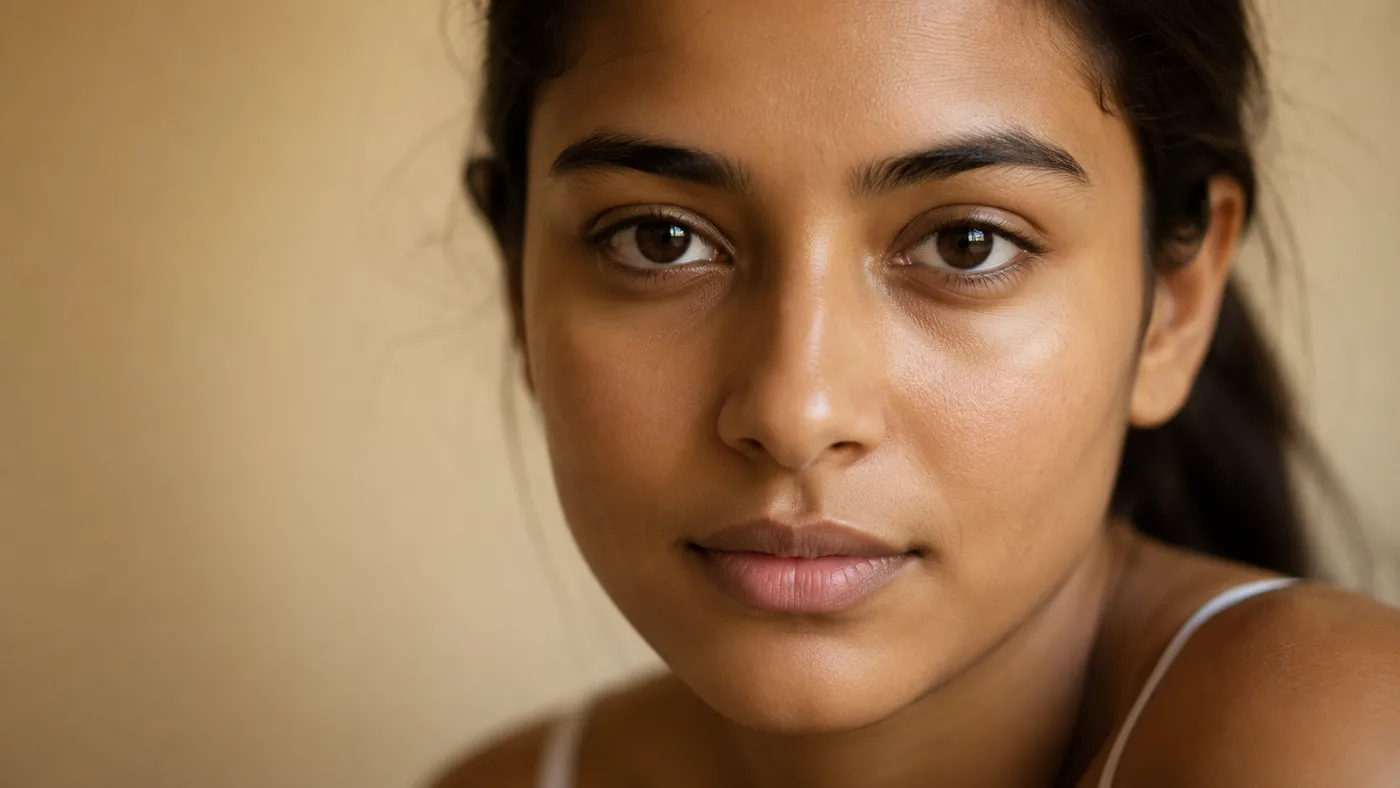
What olive skin actually is
Olive skin is easiest to understand if you separate two things that people often blur together: the surface color of your skin and the undertone underneath it. Surface color is how light or deep your skin looks at a glance. Undertone is the quieter hue that sits beneath it and shows up in how colors, makeup, and lighting behave against you.
Most people are described as having a warm undertone (golden, peachy, yellow), a cool undertone (pink, rosy, bluish), or a neutral one (a balance of the two). Olive skin is a bit different. It usually has a green or gray cast layered over a warm or neutral base. That extra green is the whole story. It is why olive skin can look golden in sunlight and faintly sallow or ashy under office lights, and why it confuses so many foundation shade ranges.
Two things are worth saying plainly. First, olive is not one depth. There is very fair olive skin, medium olive skin, and deep olive skin, and they share the undertone, not the surface color. Second, "olive" is a beauty and everyday description, not a formal medical category. Dermatologists classify skin by how it reacts to the sun, using the Fitzpatrick scale, and that scale does not have an "olive" box. So treat everything below as a practical guide to a real, recognizable look, not a clinical diagnosis.
How to tell if you have olive skin
There is no single test that settles it, and anyone who tells you otherwise is overselling. What you can do is look for a pattern. If several of these checks point the same way, olive is a good working answer. Treat them all as rules of thumb.
1. Foundation never quite matches
This is the most reliable clue, because it is something you have already tested many times without meaning to. If shades labeled "neutral" go gray or ashy on you, shades labeled "warm" turn orange or muddy, and anything pink looks like a mask, that contradiction is the signature of olive skin. A plain warm undertone takes golden shades well. A green-tinged one fights both pink and peach.
2. You look ashy or sallow in some light
Olive skin often looks lovely in warm daylight and slightly gray, tired, or greenish under cool fluorescent or LED lighting. If photos from the same day look healthy outdoors and washed out indoors, the green in your undertone is likely being pulled forward by the cooler light.
3. Gold and silver both seem to work
The jewelry test is a classic: gold tends to flatter warm skin and silver tends to flatter cool skin. People with olive skin often find that both look fine, or that neither is a clear winner. Rose gold, brass, and antique finishes are often the ones that look best. This is a soft signal, not proof.
4. The vein test, with its limits
Look at the veins on the inside of your wrist in daylight. Greenish veins are usually read as warm, bluish or purple as cool, and a mix as neutral. Olive skin often shows greenish or hard-to-call veins. Be cautious with this one, though. Vein color depends on how thick and how deep your skin is, it is hard to judge on deeper skin tones, and lighting changes it a lot. Use it as one vote, not the deciding one.
5. The white paper check
With a bare face, in natural daylight, hold a sheet of plain white paper next to your cheek and jaw and look in a mirror. Against the white, cool skin tends to look pink or rosy, warm skin looks yellow or golden, and olive skin often looks slightly green, gray, or khaki next to the paper. It works best in neutral daylight.
A fair way to read your results
If three or more of these checks point to olive, you can shop and dress as olive and see how it goes. If the results split, you are probably neutral with a slight olive lean, which is very common. Either way, the real test is whether the products you choose look natural on you in daylight.
Want a second opinion? Our free skin undertone test combines these checks into seven quick questions and suggests whether you lean cool, warm, neutral or olive.
Olive skin and the Fitzpatrick scale
The Fitzpatrick scale and your undertone answer different questions. The scale sorts skin into six phototypes (the clinical term for skin type) by how it reacts to the sun: how easily it burns and how readily it tans. Undertone is about color. The two often travel together, but they are not the same thing.
Most olive skin lands at Type III or Type IV. Type III sometimes burns before it tans, while Type IV rarely burns and tans easily to a warm brown. But olive skin can sit anywhere from about Type II to Type V. A very fair olive complexion might burn fairly easily, like Type II, while deep olive skin might behave more like Type V and almost never burn.
That matters, because your sun-care routine should follow how your skin behaves, not just how it looks. If you are not sure where you land, take the free Fitzpatrick test →. It asks how your skin actually reacts to the sun and gives you a result in under a minute.
Light, medium, and deep olive
Because olive is an undertone, it shows up differently at different depths. Knowing roughly where you sit helps you choose shades and set expectations.
- Light olive. Fair skin with a muted, slightly green or beige cast rather than pink. It is the hardest to spot, because people with light olive skin are often told they are "fair" and handed pink-toned shades that never sit right. It may burn more readily than deeper olive skin, so sun protection is not optional.
- Medium olive. The classic olive look: a golden-beige to light tan surface with a visible green-gold cast. It usually tans easily and is the depth most foundation ranges label "olive," when they label it at all.
- Deep olive. Rich tan to brown skin with a warm, slightly green or khaki base. It can be mistaken for plain warm skin, and the main frustrations are foundation turning red or orange and sunscreen leaving a gray cast.
Whatever your depth, olive skin tends to make pigment readily, so dark marks after a breakout and patches of uneven tone can be a common concern. Daily sunscreen is the most effective habit to keep it even.
What suits olive skin
The common thread for olive skin is simple: work with the green-gold undertone instead of fighting it. In practice, that means avoiding things that are very pink, very cool, or very orange, and leaning toward warm, golden, and earthy shades.
Foundation
Look for shades described as golden, olive, or neutral-warm with a yellow base, rather than pink or peach. A few ranges name olive shades outright; most use undertone codes such as W or G (warm, golden) and N (neutral), and those are the ones to read. Always swatch three shades on your jawline, blending down onto the neck, and check them in daylight and again after a few hours, since some formulas darken as they wear. When you are between two shades, the deeper one usually looks more natural on olive skin than the lighter one, which tends to read gray. Our guide to the best foundation for olive skin goes through specific picks and shade-matching in detail.
Concealer and color correcting
Olive skin often has darker, slightly purple or gray circles under the eyes. A peach or apricot corrector on light to medium olive skin, or an orange one on deeper olive skin, can cancel that before concealer goes on. Choose a concealer with a golden or yellow base, no more than a shade lighter than your foundation. Very light, pink concealers tend to look gray on olive skin.
Blush, bronzer, and lips
Warm, earthy shades usually look most natural: terracotta, apricot, warm rose, brick, and berry for blush and lips. Very cool baby pinks and frosty pastels can make olive skin look sallow. For bronzer, pick a warm, soft brown rather than an orange one, which can clash with the green in your undertone.
Sunscreen
Olive skin needs a daily broad-spectrum SPF 30 or higher like every skin tone, and the deal-breaker is finish. Thick untinted mineral sunscreens can leave a gray or white cast that looks especially ashy on olive skin. Clear chemical formulas or tinted sunscreens usually disappear better. The American Academy of Dermatology notes that tinted sunscreens can help avoid that cast and contain iron oxides that help protect against visible light, which can drive darkening on deeper skin tones. For no-cast options, see our guide to the best sunscreen for brown skin, which suits medium and deep olive skin well.
Clothing and jewelry colors
Keep it simple. Olive skin usually looks good in earthy and jewel tones: olive and forest green, mustard, rust, camel, warm cream, teal, deep purple, and burgundy. Stark optic white and very icy pastels can wash it out, so a soft ivory or cream is often kinder near the face. For jewelry, gold, rose gold, brass, and mixed metals all tend to work. As always, if a color makes you look rested in daylight, it suits you, whatever a chart says.
A few picks for olive skin
These are a handful of picks from our foundation and sunscreen guides that fit olive skin especially well. Pick whichever brand you already trust; the reasons on each card tell you what to look for.
As an Amazon Associate this site earns from qualifying purchases, at no extra cost to you. Picks are chosen on fit for olive skin, not on what pays the most; links open a search so you can compare shades and prices yourself.
- Deep shade ladder with genuine golden and warm-neutral olive mids
- Satin, skin-like finish that lets olive warmth show through
- Buildable, so one bottle covers light and fuller-coverage days
- For lighter olive skin where full-warm shades go too deep
- N and W codes let you pick neutral-warm, never a pink "light" shade
- Light-to-medium build so it does not sit heavy on fair-olive skin
- Sheer wash of color with broad-spectrum mineral SPF built in
- Shades split by neutral, warm, and olive undertones
- Treat its SPF as a bonus, layer real sunscreen underneath
- Concentrated drops you mix into moisturizer or foundation to adjust
- Lets you nudge a near-match into a true olive shade
- Useful when stock shades sit just pink or just light
- Clear filters mean zero cast on brown skin
- Light, fast-absorbing finish you will wear daily
- Broad-spectrum with strong UVA coverage
- Iron-oxide tint cancels the gray cast on deep skin
- Blocks visible light, the hidden melasma trigger
- Doubles as a sheer, even-toning base
Olive undertone, but which skin type?
Your undertone tells you what colors suit you; your Fitzpatrick type tells you how much sun your skin can take. Olive skin is most often Type III or Type IV, but not always. Take the free Fitzpatrick test → to find yours.
Olive skin questions, answered
Is olive skin warm or cool?
Usually neither, exactly. Olive skin most often has a warm or neutral base with a soft green or gray cast on top, which is why it can look golden in sunlight and slightly ashy under cool light. In makeup terms it behaves closest to neutral-warm: very pink, cool shades tend to look gray on it, and very orange, peachy shades tend to look muddy.
Can pale skin be olive?
Yes. Olive describes an undertone, not a depth, so fair skin can be olive too. Light olive skin looks muted, beige, or faintly green rather than pink, and people with it are often handed pink-toned fair shades that never quite sit right. A neutral or neutral-warm light shade with a yellow base is usually a better match.
Why does foundation look gray on me?
Gray or ashy foundation usually means the shade is too pink, too cool, or too light for your undertone, so it cannot account for the green or gold in olive skin. Try a shade one step deeper with a yellow or golden base, swatch it on your jawline in daylight, and check it again a few hours later. Orange, on the other hand, usually means the shade is too peachy or has darkened as it wore.
How can I tell if I have olive skin?
Look for a pattern rather than one test. Common signs include foundation that turns gray in neutral shades and orange in warm ones, looking ashy under some lights, gold and silver jewelry both seeming fine, greenish or hard-to-read wrist veins, and a slightly green or khaki look next to white paper in daylight. These are rules of thumb, not a diagnosis.
What Fitzpatrick type is olive skin?
Most olive skin is Fitzpatrick Type III or Type IV, but it can sit anywhere from about Type II to Type V. The Fitzpatrick scale measures how your skin reacts to the sun, not its undertone, so a fair olive complexion may burn fairly easily while deep olive skin may rarely burn at all. The free quiz on this site gives your type in under a minute.
What colors look good on olive skin?
Earthy and jewel tones usually suit olive skin well: olive and forest green, mustard, rust, camel, teal, burgundy, and warm cream. In makeup, terracotta, apricot, warm rose, brick, and berry tend to look natural. Very icy pastels and stark optic white can wash olive skin out, and gold, rose gold, and mixed metals are all easy jewelry choices.
Sources
- Fitzpatrick TB. The validity and practicality of sun-reactive skin types I through VI. Archives of Dermatology, 1988. PubMed
- American Academy of Dermatology. Sunscreen FAQs
- Skin Cancer Foundation. Skin cancer in people of color
"Olive" is an everyday and beauty-industry description, not a medical classification. The home checks on this page are rules of thumb. This site is educational and is not medical advice; for any skin concern, see a board-certified dermatologist.