
Skin undertone test: cool, warm, neutral or olive?
Seven quick questions to suggest whether your skin leans cool, warm, neutral or olive, then the foundation and makeup shades that tend to suit it. No single trick can tell you your undertone, so this quiz combines several signals for a better guess.
Loading the test...
As an Amazon Associate this site earns from qualifying purchases. Picks are chosen on fit, not commission.
✓ Tends to suit you
✕ Tends to fight you
Makeup picks for your undertone
Real products that come in shades for your undertone. Always swatch on your jaw in daylight before you commit.
What a skin undertone is
Skin has two layers of color worth knowing about. The surface tone is the one you see first: fair, light, medium, tan, brown, deep. It changes with the seasons, darkening with a tan and fading in winter. The undertone is the quieter cast underneath it, the slight pink, golden, or green that shows up most clearly when something sits next to your skin, like a foundation stripe, a white shirt, or a gold ring.
Undertone is mostly a makeup and clothing idea rather than a medical one. Nobody measures it at a dermatologist's office, and there is no official scale. But it explains a very real everyday problem: why two foundations of the same depth can look completely different on you, one vanishing and the other looking orange, pink, or gray by lunchtime.
Cool and warm undertones
Cool undertones lean pink, rosy, red, or slightly blue. Cool skin often flushes easily, and golden or yellow-based foundation can sit on top of it and look sallow. Bright white, silver, jewel tones, and blue-based reds tend to look crisp on cool skin. Cool undertones are found at every depth, from very fair to very deep.
Warm undertones lean golden, peachy, or yellow. Pink-based foundation tends to look ashy on warm skin, and icy colors can drain it. Cream, ivory, gold jewelry, coral, terracotta, and orange-leaning reds usually make warm skin look alive. Warm undertones, too, show up across every surface tone.
Neutral and olive undertones
Neutral undertones sit in the middle. The skin is neither clearly pink nor clearly golden, so silver and gold both look fine and most foundation ranges have something close. The main risk for neutral skin is the wrong depth, not the wrong tone. A neutral that tips slightly one way is common, which is why the quiz will sometimes tell you that you lean cool or warm.
Olive undertones are the ones most shade ranges get wrong. Olive skin is warm underneath but carries a muted green, gray, or khaki cast that plain warm skin does not. The classic tell is a double failure: shades labeled warm turn orange, and shades labeled neutral turn gray. That happens because most foundations are mixed from pink and yellow pigments, and olive needs a touch of green on top. Olive is often linked with medium skin, but it can appear at lighter and deeper depths too. Our guide to the best foundation for olive skin goes deeper on matching it.
Cool
Silver and bright white flatter. Golden foundation can look sallow.
Warm
Gold and cream flatter. Pink foundation can look ashy.
Neutral
Most shades work. Getting the depth right matters most.
Olive
Warm shades go orange and neutral shades go gray. Look for olive labels.
How to tell your undertone, honestly
You will find the same three tricks everywhere: the vein test, the jewelry test, and the white paper or white shirt test. They are popular rules of thumb, not science. We could not find research that tests any of them as a way to read undertone, and vein color in particular depends on a lot more than undertone: how deep and how wide the vein is, how your skin scatters and absorbs light, and how your eyes read the color. That is why this quiz does not lean on any one of them. It combines several weak signals with the two that tend to be most useful, how your bare skin looks in daylight and how foundation goes wrong on you, for a better guess.
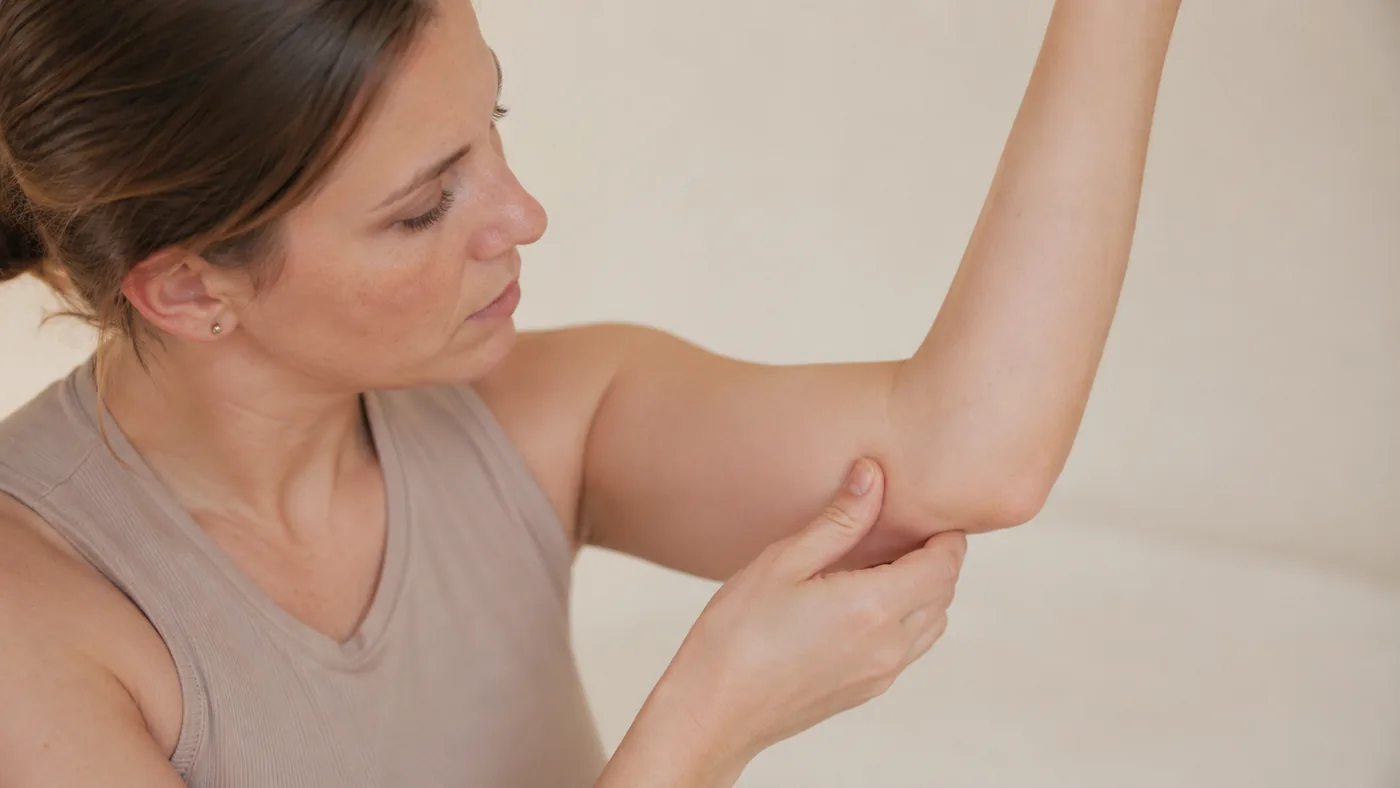
If you want to check by hand, here is what each test is worth:
- Foundation that goes wrong. The most useful clue. Shades that turn orange or yellow point cool. Shades that look pink or ashy point warm. If warm goes orange and neutral goes gray, think olive.
- Bare skin in daylight. Look at your jaw and neck near a window, with no makeup. A pink or rosy cast points cool, golden or peachy points warm, a green or khaki tint points olive.
- White vs cream near your face. A soft signal. If bright white looks better, lean cool; if cream does, lean warm.
- Silver vs gold jewelry. Also soft, and easily swayed by taste. Use it as a tiebreaker only.
- Veins on the inner wrist. The weakest of the lot. Blue or purple is said to mean cool and green to mean warm, but the color you see depends heavily on the vein itself.
Two habits help with every test. Use daylight rather than warm indoor bulbs, which tint everything golden. And skip the test right after sun, exercise, or a hot shower, when redness can make warm skin look cool for an hour or two.
Foundation and makeup by undertone
Most foundation lines now mark undertone in the shade code. L'Oréal True Match uses C, N, and W for cool, neutral, and warm, and Estée Lauder Double Wear codes such as 1C1 or 3W1 work the same way, with the number for depth and the letter for undertone. Other brands use words like rosy, golden, or olive. Read the code rather than the shade name, because names like "natural beige" can mean anything. Codes do not carry across brands either, so treat each line on its own terms.
- Cool: foundation marked C, cool, or rosy. Blue-based reds, berries, plums, and clear pinks on lips and cheeks. Taupe for brows and contour.
- Warm: foundation marked W, warm, or golden. Coral, terracotta, peach, and orange-leaning reds. Warm bronzer instead of gray-toned contour.
- Neutral: foundation marked N or neutral. Peachy pinks and rosy nudes are easy wins, and most colors work. Focus on getting the depth right.
- Olive: foundation marked olive, golden, or neutral-warm with a yellow base. Warm berries, brick reds, and bronze. A banana or warm translucent powder to set, since a cool powder can leave a gray film.
Whatever your undertone, swatch two or three candidate shades in stripes along your jaw, blend them down toward your neck, and step into daylight. The right one disappears. Then wear it for a few hours before you decide, because many formulas darken a little as they settle. The quiz result above lists a few real products that come in shades for your undertone, with budget alternatives where one fits.
Undertone vs Fitzpatrick skin type
Undertone and your Fitzpatrick skin type answer different questions. The Fitzpatrick scale sorts skin into six types, Type I to Type VI, by how it reacts to the sun: how easily it burns and how readily it tans. It is a sun-care tool. Undertone is a color cast, and it is a makeup tool. Neither one predicts the other. A fair Type II can be warm and golden, a deep Type VI can be cool, and olive undertones turn up well beyond the medium Type IV skin they are most often linked with.
That is also why the quiz above barely counts your sun reaction. How you burn and tan mostly tells you your Fitzpatrick type, not your undertone. In practice you need both: your undertone to choose foundation, and your Fitzpatrick type to choose sunscreen and know how careful to be in the sun. Every undertone needs daily broad-spectrum SPF under makeup.
Find your Fitzpatrick type too
It takes under a minute and covers what undertone cannot: how your skin handles the sun. Take the free Fitzpatrick skin type test →
Sources
- Kienle A, Lilge L, Vitkin IA, et al., "Why do veins appear blue? A new look at an old question," Applied Optics, 1996: vein color depends on skin optics, vessel size and depth, and perception.
- Fitzpatrick TB, "The validity and practicality of sun-reactive skin types I through VI," Archives of Dermatology, 1988: skin types are defined by sun reaction.
We found no peer-reviewed research testing the vein, jewelry, or white-paper checks as undertone tests, so they are presented here as rules of thumb. This site is educational and is not medical advice; for any skin concern, see a board-certified dermatologist.
Undertone questions
What is a skin undertone?
Your undertone is the subtle color that sits under the surface of your skin: pink or rosy for cool, golden or peachy for warm, a balance of the two for neutral, and a muted green or gray cast for olive. Your surface tone can tan, burn, or fade with the seasons, but the undertone is what decides whether a foundation shade melts in or sits on top.
Is the vein test accurate?
Only roughly. Vein color depends on how deep the vein sits, how big it is, how your skin scatters light, and how your eyes read the result, not just on your undertone. It is a popular rule of thumb with no real research behind it as an undertone test, which is why this quiz treats it as one small signal and combines it with how foundation and bare skin actually look in daylight.
What is the difference between olive and warm undertones?
Both lean away from pink, but olive adds a muted green or gray cast that plain warm skin does not have. The giveaway is foundation: on warm skin a golden shade looks right, while on olive skin "warm" shades often turn orange and "neutral" shades turn gray. If that happens to you, look for shades labeled olive, golden, or neutral-warm with a yellow base.
Does a tan change my undertone?
A tan darkens and warms your surface tone, and redness from sun or irritation can make skin look cooler, but your undertone itself is generally thought of as stable. Check it on skin the sun rarely reaches, in daylight, and match foundation to your face and neck as they are when you shop, since a summer and a winter shade are often different depths.
Is undertone the same as Fitzpatrick skin type?
No. Your Fitzpatrick type describes how your skin reacts to the sun, how easily it burns and how readily it tans, on a scale from Type I to Type VI. Undertone describes the color cast under your skin. Any type can have any undertone, so a fair Type II can be warm and a deep Type VI can be cool. Use the undertone for makeup and your Fitzpatrick type for sun care.
Which foundation should I pick if I am neutral?
Start with shades marked N or neutral at your depth, then swatch one step warmer and one step cooler on your jaw in daylight. Neutral skin can wear the widest range, so the bigger risk is the wrong depth rather than the wrong tone. Brands use different codes, so a neutral in one line may not match a neutral in another.
Now find your skin type
Your undertone picks your foundation. Your Fitzpatrick type picks your sun care. Take the free test and get a routine for how your skin really handles the sun.
Take the free test →